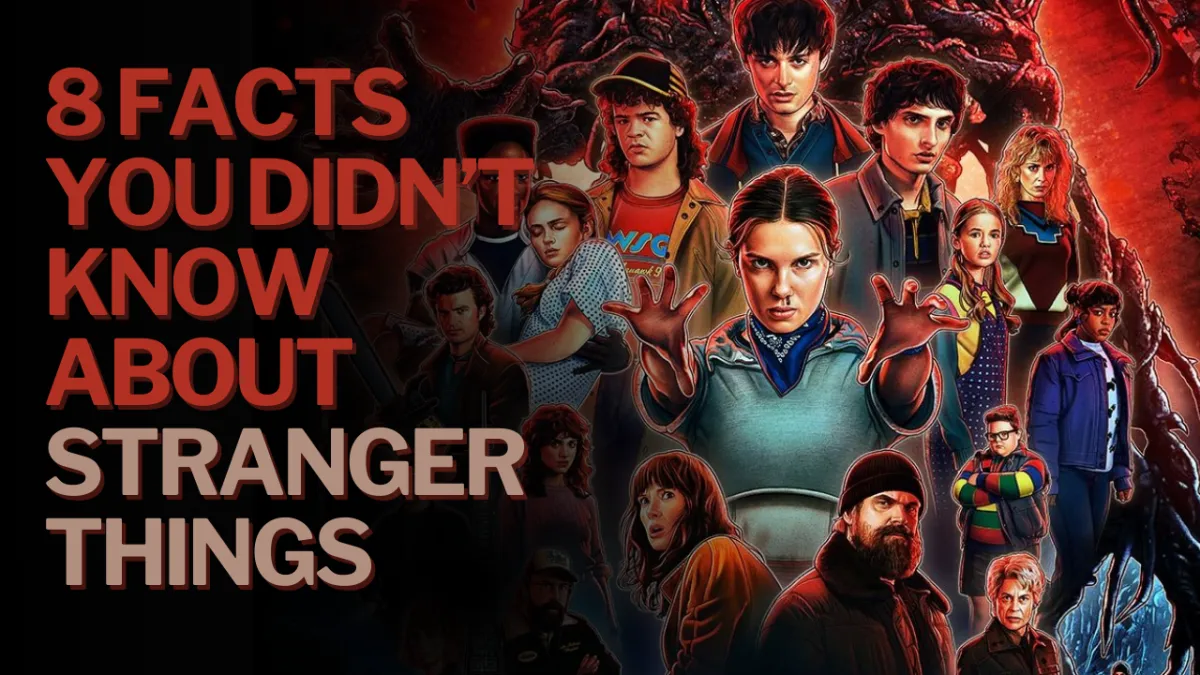
Beyond the Upside Down: 10 Hidden Truths About Stranger Things
Welcome back to Facts And More. For years, the Netflix series Stranger Things has defined modern pop culture, brilliantly blending sci-fi horror with pitch-perfect '80s nostalgia. The world of Hawkins, Indiana, and the terror of the Upside Down feel instantly recognizable—a loving homage to the directors and writers who defined the 1980s.
But beneath the surface of every Demogorgon attack and every heartfelt moment between "The Party," there are layers of production secrets, happy accidents, and deep-cut lore that even the most devoted fans often miss. The Duffer Brothers didn’t just create a show; they crafted a historical tapestry where the most interesting threads were often the ones almost left on the cutting room floor.
Here are 10 of the most transformative facts about the hit series.
1. The Real-Life Conspiracy That Inspired the Plot
The genesis of Stranger Things is rooted in something far more terrestrial than the Upside Down: a Cold War conspiracy theory. The series was originally titled "Montauk," a reference to its planned setting in Montauk, Long Island.
This location was chosen because of the infamous "Montauk Project" urban legend. This alleged government program claimed that in the 1980s, classified experiments were conducted on children involving psychic warfare, mind control, and opening rifts in spacetime. While the setting moved to the fictional Hawkins, Indiana, to allow for more creative freedom, the core terror of a government gone rogue remains the show's foundational bedrock.
2. The "Happy Accident" of Steve Harrington
Perhaps the biggest shift in the show's history involves Steve Harrington. Originally, Steve was written as a "throwaway" teen antagonist—the quintessential '80s movie jock and an irredeemable douchebag. He was fully slated to die in the first season.
However, actor Joe Keery brought such unexpected vulnerability and charm to the role that the Duffer Brothers couldn't bring themselves to kill him off. This decision didn't just save Steve; it paved the way for his transformation into the "world's best babysitter" and his iconic, unplanned bromance with Dustin Henderson.
3. Casting Choices That Could Have Been
It is impossible to imagine anyone else in these roles today, but the initial concepts for Hopper and Joyce were quite different. In early pitches, names like Sam Rockwell were mentioned for Jim Hopper, while stars such as Naomi Watts or Marisa Tomei were discussed for Joyce.
The eventual casting of David Harbour and Winona Ryder was a stroke of genius. Ryder, in particular, was instrumental in developing the show’s aesthetic, even advocating for the iconic "Christmas lights" scene as a way for Joyce to communicate with Will.
4. Gaten Matarazzo’s Instant Audition
The search for "The Party" was exhaustive, involving over 1,200 auditions. Yet, Gaten Matarazzo (Dustin) was cast almost instantly. The Duffer Brothers were so captivated by his audition tape that they immediately knew he was the one.
Gaten has a real-life genetic condition called cleidocranial dysplasia, which affects the development of bones and teeth. Instead of hiding it, the Duffers incorporated it directly into Dustin's character, giving the role a level of authenticity and representation rarely seen in mainstream sci-fi.
5. Practical Effects Over CGI
In an age dominated by digital effects, the Season 1 Demogorgon was largely a practical effect. The monster was brought to life by movement specialist Mark Steger, who wore an elaborate suit and stilts.
The Duffer Brothers wanted a tangible, slime-dripping presence on set to evoke the feel of '80s horror classics like Alien or The Thing. While later seasons utilized more CGI for massive creatures like the Mind Flayer, the tactile horror of the original Demogorgon established the show's gritty reality.
6. The True Physics of the Upside Down
For years, fans wondered why the Upside Down looked exactly like Hawkins. Season 4 finally gave us the answer: it is a static mirror.
When Eleven made a psychic connection with the Demogorgon in November 1983, she tore open the Gate and simultaneously imprinted the dimension with a copy of Hawkins at that precise moment. This is why the Upside Down is "stuck" in 1983, with newer additions like the Starcourt Mall missing from its landscape.
7. Eleven’s First Kiss Disappointment
While the bond between Eleven and Mike is the emotional heart of the series, the behind-the-scenes reality of their first kiss at the Snow Ball was far from romantic. Millie Bobby Brown recalled that immediately after the take, she exclaimed that "kissing sucks!" It’s a charming reminder that while these characters were saving the world, the actors were just kids navigating awkward teenage milestones.
8. Real Goo and Real Grime
To maintain the "visceral" feel of the Upside Down, the production team avoided green screens whenever possible. When Natalia Dyer (Nancy) crawled through the portal in the tree during Season 1, she was reportedly covered in actual sticky, viscous "nether-goo." This commitment to physical discomfort forced a more genuine reaction from the actors, making the terror of the other dimension feel truly repulsive to the audience.
9. The "Natural Skin" Policy
The Duffer Brothers' commitment to realism extended to the makeup chair. They implemented a specific policy: do not cover up the actors' natural teenage acne. In most high-budget series, makeup artists strive for perfection. However, the Duffers insisted that regular kids in a small 1980s town wouldn't have flawless skin. This small detail helps maintain the show’s grounded, relatable feel, making the characters feel like real people rather than polished stars.
10. The One-Dollar Trailer
Jim Hopper’s isolated life in Season 1 was perfectly encapsulated by his rundown trailer. To achieve this look, the production team actually purchased the on-set trailer for just one dollar. This wasn't just a budget-saver; the dilapidated state of the prop visually communicated Hopper’s grief and apathy more effectively than any line of dialogue could.
"The Duffer Brothers didn’t just create a show; they crafted a historical tapestry."
From accidental heroes to billion-to-one casting strikes, the secrets of Stranger Things are as rich and layered as the Upside Down itself. Their dedication to "character truth" is why the show will endure long after the Gate is finally closed.
